

Six hospital admissions. None since coaching.
A mum I worked with had done something no parent ever imagines having to do.
She had left her teenage daughter in a mental health hospital six times.
Six admissions. Six times walking away and leaving her daughter in the care of someone else, not knowing what would happen next.

Her daughter, a neurodivergent teenager, was moving through repeated mental health crises, including self-harm. Six hospital admissions in total. Somewhere along the way, her mum had left work because supporting her daughter had become the whole job. Every day was about getting through the day.
If any of that sounds close to home, I want to say the thing I say to parents in this position early on: you're not the problem here, and neither is your child. Something underneath the behaviour is asking to be understood.
Everyone wants to know how to stop it
When a family is in crisis, the advice out there tends to aim straight at the behaviour on top. How do you stop the self-harm? How do you get her talking? How do you get through the next crisis without another admission?
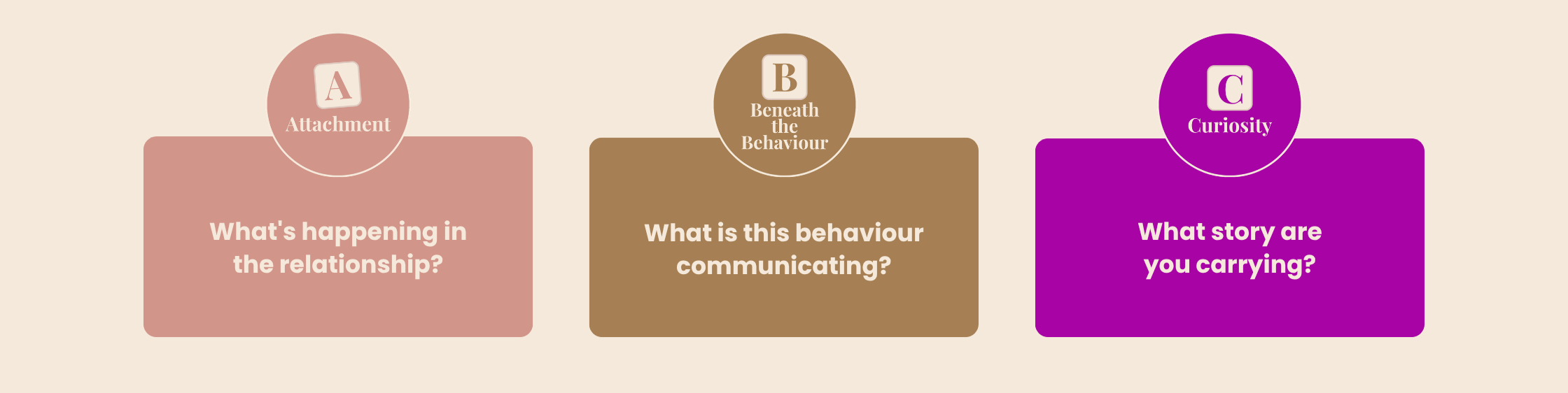
Fair questions, all of them. But they skip a step. It's a bit like treating a fever without asking what's driving the temperature up in the first place. You can chase the number down for a while, but if you haven't found what's underneath it, it comes back. This is where my ABC Framework comes in, and it's shaped everything I do.
A is for Attachment. Before anything else, I want to know what's happening in the relationship, not what's wrong with the child.
B is for Beneath the Behaviour, and this was the pillar that mattered most here. Self-harm, shutdown, crisis after crisis- none of it is random. It's a nervous system trying to say something it doesn't have the words for yet, and the job is to figure out what.
C is for Curiosity. What else might be true, beyond the story we've already decided about what's going on?
I call this Parenting Medicine because medicine treats the cause rather than just chasing the symptom, and that's exactly the shift this family needed.
What actually shifted
The biggest change for this mum wasn't a technique she learned. It was a question that replaced the one she'd been carrying around for years.
She stopped asking How do I fix this? She started asking what her daughter's behaviour was communicating, and how she could stay connected to her rather than escalate alongside the fear every time things got hard.
By the end of our work together, her language had changed completely, and she said something I still think about:
"I can't fix her. She doesn't need fixing."
That's the kind of sentence that changes what you're working towards. You're no longer trying to make the distress disappear. You're becoming someone who can stay in the room with your child through it, which is a different job entirely.
Where things landed
There have been no further hospital admissions since coaching. Her daughter now lives independently, supports herself financially, works and runs a small creative business. Her mum went back to work and built her own business alongside it.
I won't pretend this family has it all figured out now, because that's not honest and I don't sell that story to anyone. They still navigate real challenges. What's different is that crisis stopped being the thing that organised their whole life.
That's the outcome this work is actually aiming for. Not a child with zero distress. A family who can stay connected while they move through it together.
If this is where you're at
If your family is in this territory right now, please hear this: it isn't too serious or too complex for this work. That fear is one of the most common things parents bring to our first conversation, and it's almost never true once we're in it.
What is true is that a generic script won't get you there. You need someone helping you see what's underneath the behaviour for your specific child, in your specific family.
I put together a video walking through how this framework applies when a family is in crisis, and what the first steps actually look like in practice.
Watch it here if you need it: